
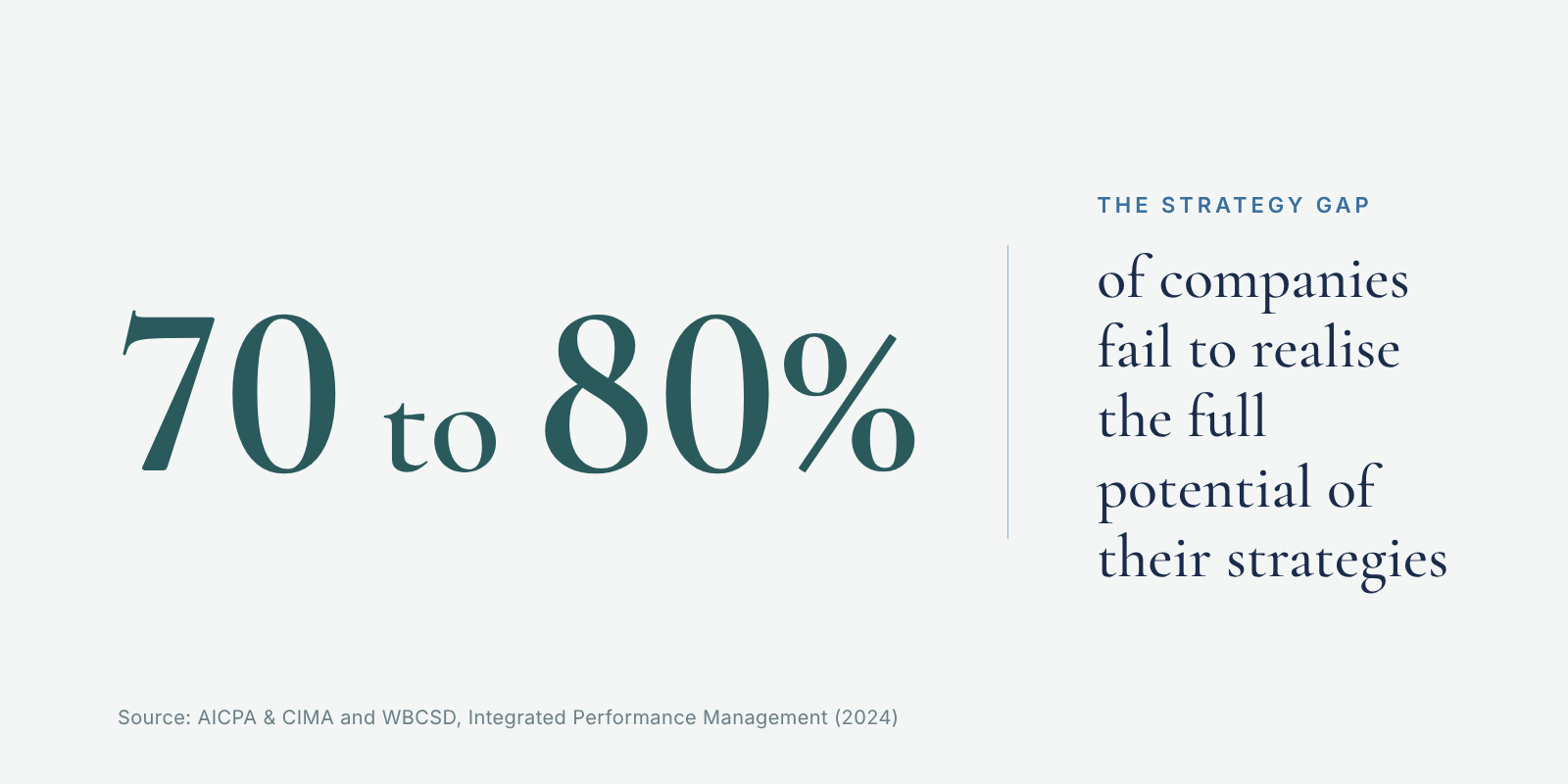
Between 70% and 80% of companies fail to realise the full potential of their strategies. Research by AICPA & CIMA and the World Business Council for Sustainable Development (WBCSD) points to a recurring cause: a general lack of understanding of the strategy, and of how each team's work connects to it. With up to 90% of company value now held in intangible assets, the knowledge and effort of people is where strategy succeeds or fails.
The report Integrated Performance Management: Driving strategy, engaging workforces (2024) examines why this gap persists and proposes a framework to close it. The research draws on interviews with 25 executives, seven round tables with more than 50 participants and a steering group of WBCSD member companies.
Where the disconnect comes from
Most companies connect people to strategy through an annual goal cascade. The process is bureaucratic, and managers interpret the strategy differently, choose tactics that play to their strengths, or select initiatives most likely to reward them. Finance manages business performance while HR manages people performance, in separate silos. Incentives are aligned with company success at the top and weaken further down the hierarchy.
How to close the gap
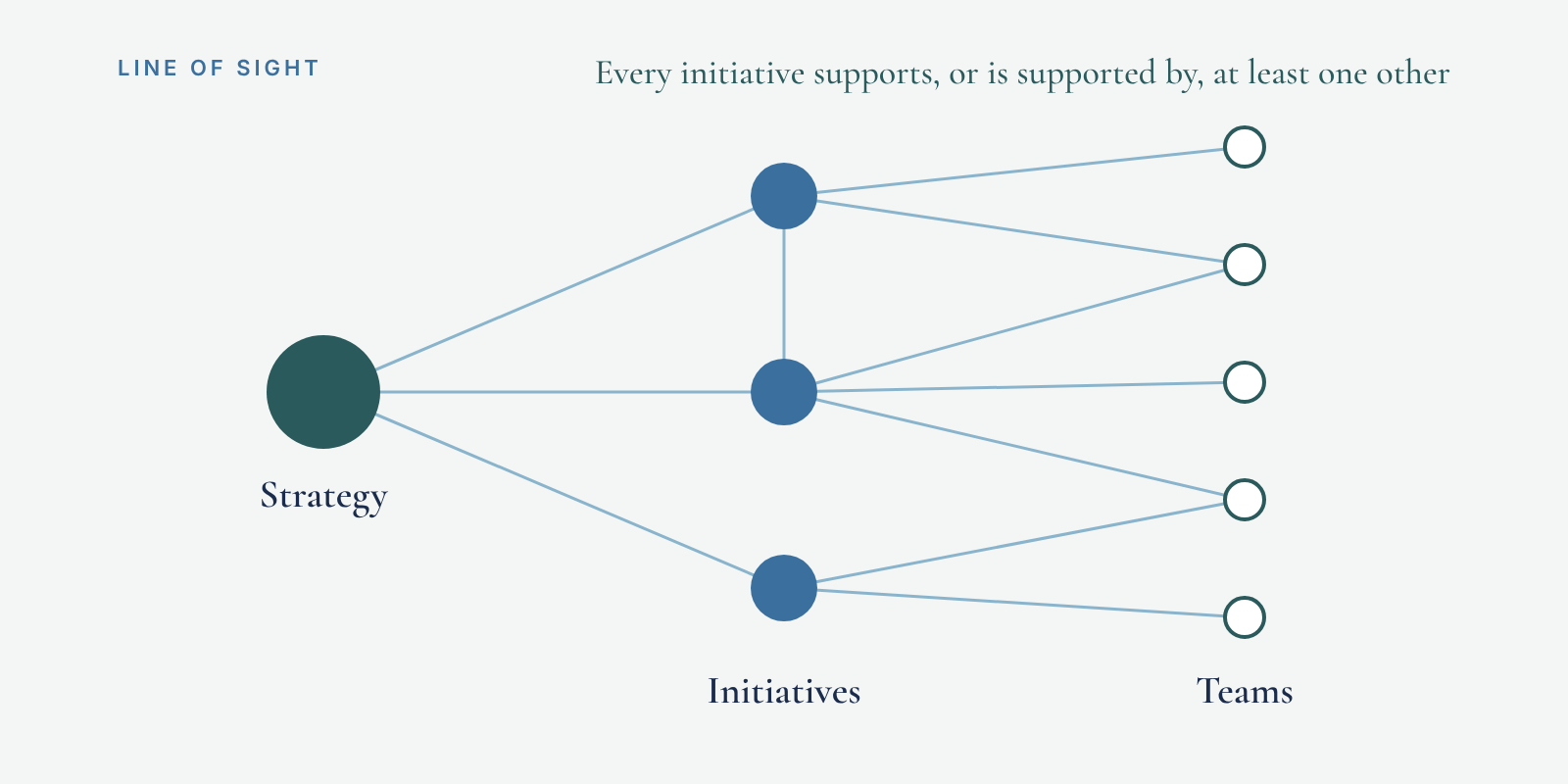
Map every initiative to a strategy. Each project or activity is linked to the strategy it supports and to the other initiatives it depends on, with an agreed share of contribution. Every initiative should support, or be supported by, at least one other. This creates a line of sight from individual work to strategic results.
Give strategies an owner. Authority shifts gradually from functional leaders towards owners of strategic objectives, so that execution has someone accountable for it.
Let teams set their own objectives. Teams agree their goals with the owners of the initiatives they support, with access to the information they need on the strategy, in place of an annual top-down cascade.
Make strategic information visible. Costs, targets, risks and ESG measures of each initiative are visible to all employees, subject to competition-sensitive data. Visibility builds trust and a consistent reading of the strategy.
Replace the annual appraisal with ongoing conversations. Owners of connected initiatives review performance together throughout the year, focusing on development, with enabling controls (such as stage gate reviews) in place of rigid procedures.
Why this matters for sustainability
Sustainability targets fail in the same way as any other strategic objective when nobody below the executive team can see how their work affects them. The framework treats ESG measures as attributes of each initiative, alongside cost, revenue and risk, so that sustainability commitments are managed where the work is done.
Acknowledgements
Thanks to my co-authors of this report: Nancy Marc-Thrasybule, Peter Spence, Raluca Stroe and Ken Witt at AICPA & CIMA, and Andy Beanland and Khaliun Purevsuren at WBCSD.